Thursday, 27 August
19:00, Murska Sobota Gallery
Goran Turnšek (SI, NL): TRANSITION IN MOTION – DANCERS IN NEW OCCUPATIONS Opening of the photographic exhibition
Phase Two: Dancers in New Occupations
Dance, movement, rhythm and choreography. At first glance, you might wonder what any of this has to do with photography. Dance seems to be the very opposite of photography. Yet Turnšek draws on his own background as a dancer to forge compelling connections between dance and photography, showing that they are not nearly as opposed as they might appear.
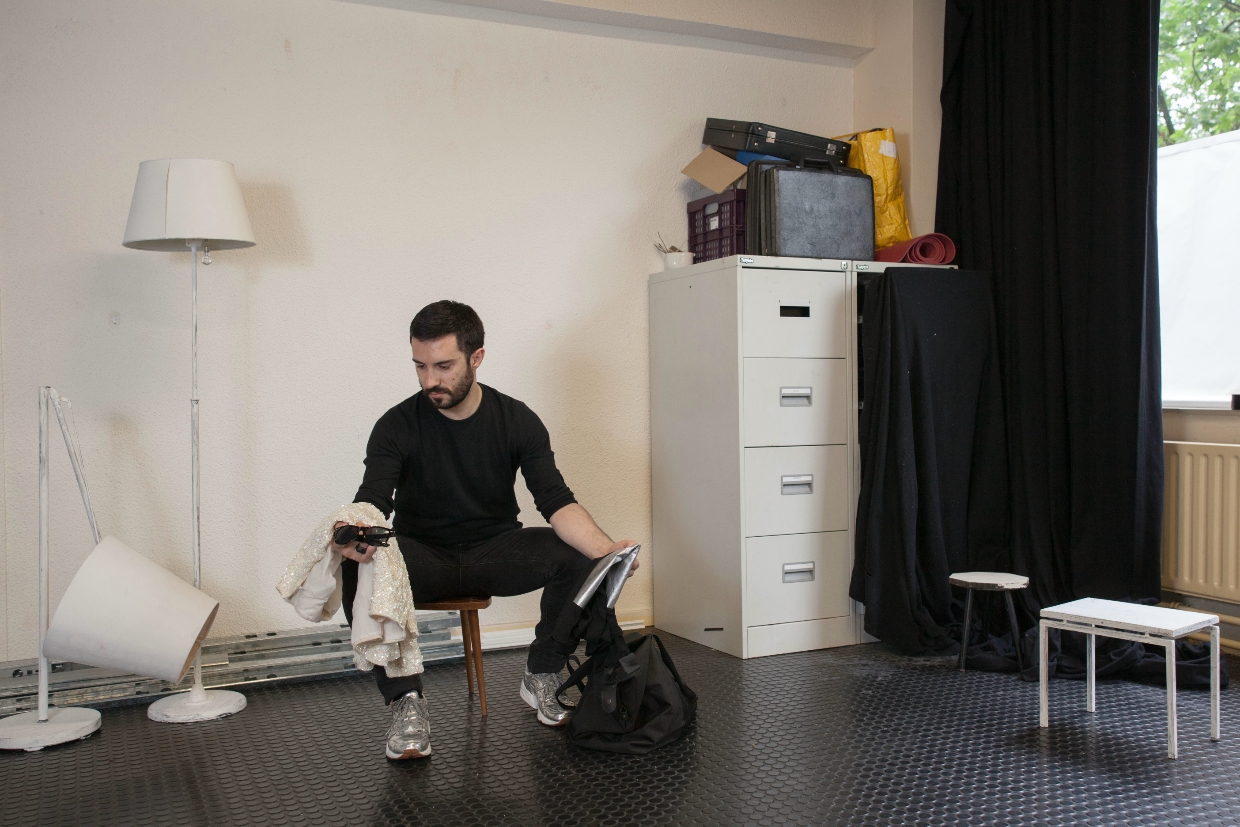
As in his earlier project Jakob, Turnšek once again bridges the worlds of professional dance and photography in Phase Two. In his view, a career after dance also provides a kind of stage on which a role is – or can be – performed. And, naturally, there is no performance without an audience.
For Turnšek, the camera has therefore become a new theatre – a substitute for the audience. As this new audience, we watch these former dancers as they find their footing in life beyond dance. We see them perform for Turnšek's lens in the bodies they now inhabit, some adapting to their new lives more readily than others.
Photography has become Turnšek's own "phase two". He has found a way to transform both the photobook and the exhibition into a choreography, setting photography itself in motion. At the same time, he offers a perceptive exploration of themes that matter deeply to dancers but do not always find expression beyond physical movement.
Anamaria Klajnšček (SI): VULNERI 30’
Idea and choreography: Anamaria Klajnšček Dance: Anamaria Klajnšček, Beno Novak, Kristýna Peldová Music and live performance: Tine Grgurevič - Bowrain Costume design: Hristijan Nashulovski & Anamaria Klajnšček Lighting design: Aljaž Zaletel Video: Yari Stepanov Production coordination: Polett Kasza Producer: Žiga Predan Produced by: Pekinpah Co-produced by: Zavod En–Knap Supported by: Zavod Move in Dance Izola Financial support by the Ministry of Culture of the Republic of Slovenia and the Department of Culture of the City of Ljubljana. Special thanks to Matej Kejžar, Petra Veber, Nina Fajdiga, Leja Jurišič, Enya Belak, Matija Franješ, Gabriela Lotaif, PTL and Festival Ukrep.
To live in society means to share space with others. Freedom is neither a realm of arbitrariness nor an infinite horizon; it is defined precisely by the presence of others who inhabit the same finite space. As the world's population continues to grow, an important question arises: where does one person's freedom (space) meet the freedom (space) end and another begin? How much space can an individual truly inhabit, occupy, shape through decision-making, think within, and ultimately exist in?
The human impulse to expand into the surrounding world – to occupy, conquer, and extend the boundaries of one's own freedom – is often justified as a survival instinct. Yet beneath this impulse frequently lies the illusion that freedom exists only where we exercise complete control over space. Vulneri is therefore not merely an observation of physical overcrowding, but a reflection of an ideological paradigm: the assumption that the presence of others necessarily means less freedom.
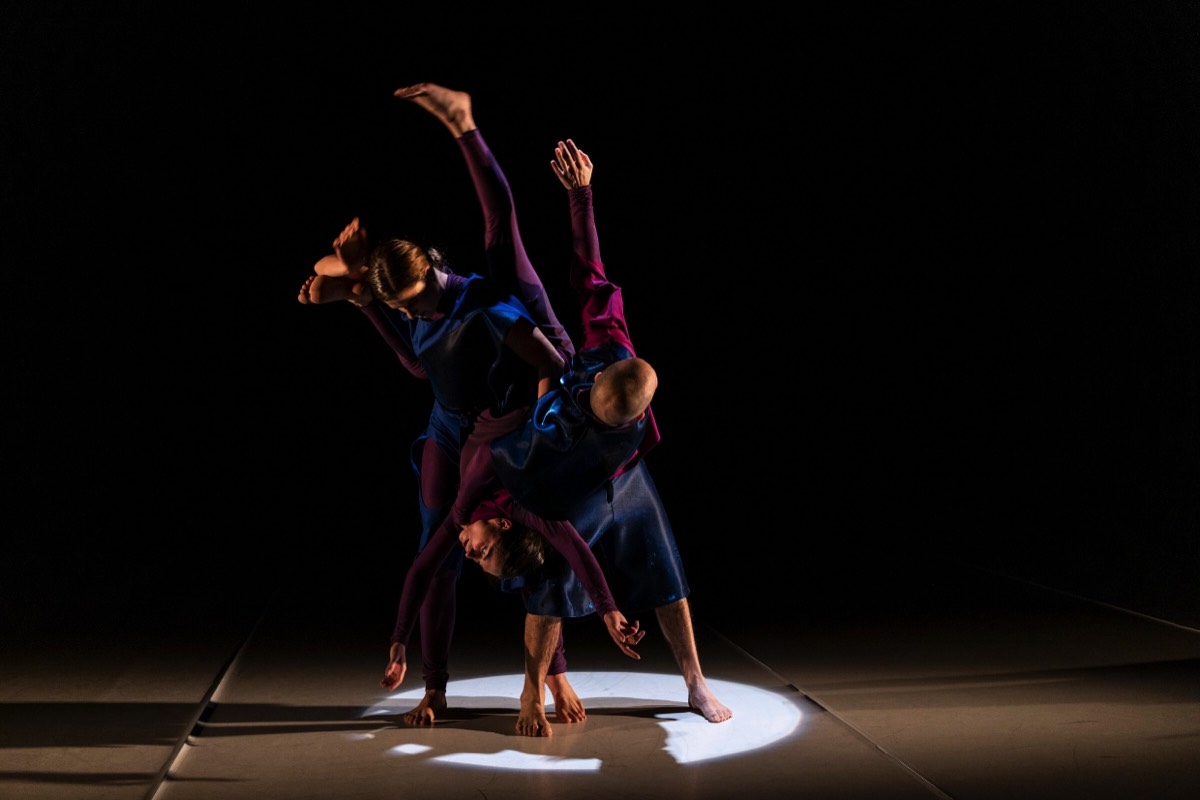
In Vulneri, Anamaria Klajnšček explores this question on a physical and material level by placing three dancers within a single square metre of space. There they cohabit, coexist, and share the same confined environment, continually searching for freedom precisely through limitation. Drawing on movement, dance, and somatic practices she has been developing over the past seven years, the artist creates a choreography of constant negotiation between bodies, active tactile listening, and an ongoing exchange of roles. The performance reveals the fragile architecture of human interdependence.